Home → Iron Fallout Decontamination Oakland
Iron fallout removal · Included in Exterior DetailUpdated October 2026Iron Fallout Removal in Oakland: Those Orange Specks on Your Paint Are Iron Fallout, and a Wash Won’t Remove Them
Tiny orange-brown freckles on a white or silver car, or a hood that feels gritty no matter how often you wash it. In Oakland that is usually iron fallout: metal particles from brake dust, rail and freeway traffic that embed in your clear coat and slowly rust. A chemical iron remover dissolves them. Here’s how it works, who needs it, and what comes next.
The short answer
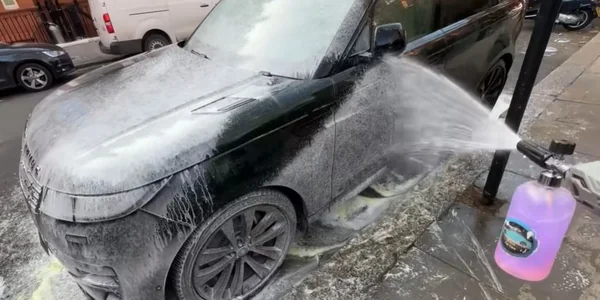
Iron fallout is tiny ferrous metal particles from brake dust, rail and industrial sources that embed in your clear coat and oxidize into orange specks. Washing doesn’t remove them. An iron remover chemically dissolves the metal and turns purple or red as it works. Most daily drivers need it every three to six months; cars near the Port, railyards or I-880 may need it more often.
Dwell time and frequency are from Auto Finesse’s published usage guidance. Products vary, so we follow the label on whatever goes on your car.
The mechanism
What Iron Fallout Is and Why Washing Doesn’t Touch It
Every time a car brakes, tiny particles of hot iron shed from the pads and rotors. Rail wheels, steel grinding and diesel exhaust add more. The airborne particles land on your car, and the hot ones stick and embed in the porous clear coat.
Once there, they rust. Moisture from the Bay’s fog does the rest, turning each particle into a rust-orange freckle. You can wash all day and the speck stays, because it is bonded into the surface.
Why does it only show up on some cars?
It shows up on light colors first. White, silver and light gray paint shows orange fast. Dark paint hides it until you feel the rough texture, but the metal is there either way.
Signs you have it
How to Tell It’s Iron Fallout
Orange or brown specks
Freckles on horizontal panels like the hood, roof and trunk. Strongest on white and silver.
Rough, gritty paint
A plastic bag over your hand drags on clean, dry paint. That’s embedded contamination.
Rust-colored wheels
Brown haze on wheel faces that returns within days of cleaning. Brake dust cooked on by heat.
Dull despite washing
Protection beads poorly, and paint looks flat even right after a wash.
Overhead loads of dust
You park under train lines, an overpass or a loading yard. High exposure.
Never decontaminated
A car that has never had iron removal or clay for a year or more is probably carrying plenty.
Oakland source map
Where the Metal Comes From Around the East Bay
Not every neighborhood gets the same dose. Here is where we see it.

The usual suspects
The Port of Oakland
Container trucks, diesel equipment and cargo handling. Most diesel exhaust particles are extremely small, and they carry carbon and metals that settle on nearby cars.
Railyards and train lines
Steel wheels grinding on steel rail shed fine ferrous dust. Cars parked near the corridor through West Oakland and Jack London see it first.
I-880 and the truck ban
Trucks over 4.5 tons have been banned from I-580 between Grand Avenue and Foothill Boulevard since the 1950s, which pushes heavy traffic onto I-880. In our experience, cars parked near the Nimitz tend to carry more soot and brake dust.
Neighborhoods and ZIP codes we see it most
West Oakland
ZIP 94607
Typical exposure
Port, rail and freeway fallout at its highest.
Jack London Square
ZIP 94607
Typical exposure
Estuary salt air, rail and diesel in one block.
East Oakland & Elmhurst
ZIP 94621
Typical exposure
I-880 corridor, Coliseum area, airport-adjacent traffic.
Fruitvale
ZIP 94601
Typical exposure
I-880 and International Boulevard brake dust.
Downtown & Uptown
ZIP 94612
Typical exposure
Stop-and-go traffic dust, street dwell time.
Emeryville & Berkeley
nearby East Bay
Typical exposure
I-80 traffic and rail adjacent to the shoreline.
Our method
How We Remove Iron Fallout Safely
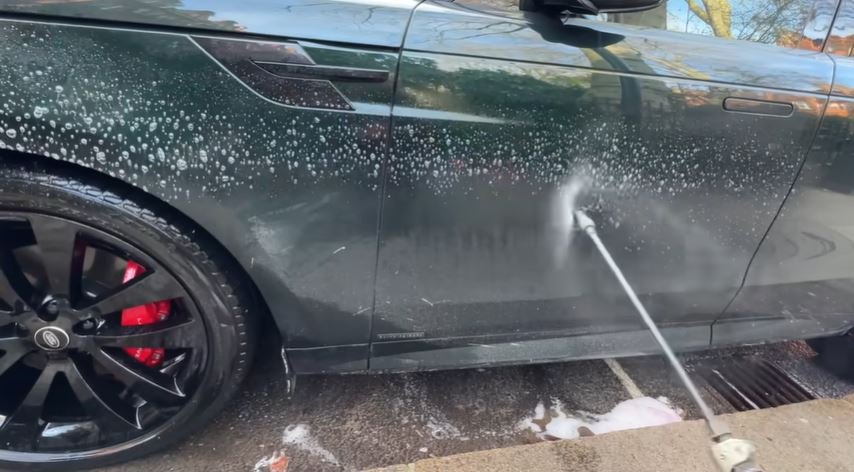
Pre-rinse and wash
Loose dirt first, so the remover works on the bonded layer, not on a coat of road film.
Cool, shaded panel
We work the remover on cool, wet paint. If it dries on the surface, it can stain or etch, so we never let that happen.
Spray and dwell
The gel or liquid clings, then slowly turns purple or red as it reacts with iron. Three to five minutes is typical, longer on heavy fallout.
Agitate stubborn spots
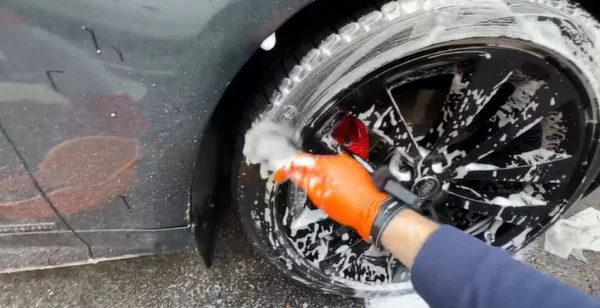
A soft brush or foam applicator on wheels and heavy areas, then rinse fully with high-volume water.
Follow with clay if needed
Iron remover only dissolves metal. Sap, overspray and tar need a clay bar to finish.
Protect the paint
Remover can strip wax and sealant, so we finish with wax or sealant, or a coating if you have one booked.
Know the limits
When Iron Remover Is the Wrong Tool
- Matte or satin paint: not recommended, it can mark the finish.
- Wrapped vehicles: chemicals can creep under wrap edges and lift them.
- Brake discs and pads: keep it off the friction surfaces.
- Every wash: it’s a periodic treatment, not a weekly product.
- Ceramic-coated cars: can reduce coating durability, so we ask your installer first and top up afterward.
We’ll tell you straight if iron removal is not the right fix for what you’re seeing. A rust spot that has broken through the paint needs bodywork, not chemistry.
DIY or pro
Can You Remove Iron Fallout Yourself?
You can. Consumer iron removers are widely sold and work the same way. What goes wrong is technique, not chemistry.
If you try it
- Work in the shade on a cool panel, never in direct sun
- Spray on wet paint and watch the clock; do not let it dry
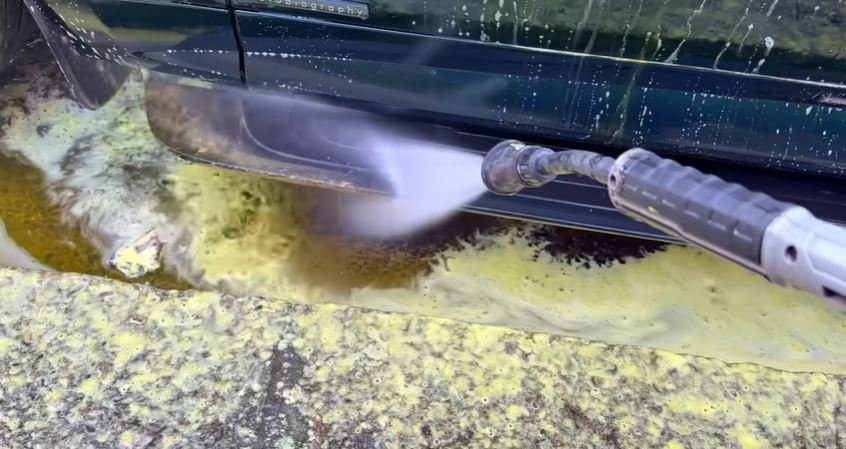
- Rinse thoroughly, ideally with a hose with good flow
- Skip matte paint, wraps and brake discs
- Follow with clay if the paint is still rough, then reapply wax or sealant
What does a pro add?
Mostly consistency and follow-through: working panel by panel, rinsing completely, then clay, protection and a check under light. If you intend to coat the car, or the paint is dark, it is usually worth having it done once, properly.
Compare
Iron Remover vs Clay Bar vs Polish
| Iron remover | Clay bar | Polish | |
|---|---|---|---|
| What it removes | Embedded iron particles | Bonded surface grit, sap, tar, overspray | Swirls, haze, light scratches |
| Method | Chemical | Mechanical | Abrasive |
| Visible sign it worked | Purple or red bleed | Clay glides smoothly | Paint clarity improves |
| Needed how often | Every 3 – 6 months | 1 – 2 times a year | As required |
| Our link | This page | Clay bar page | Paint correction |
Pricing
What Iron Fallout Removal Costs
Iron decontamination is part of our Exterior Detail (from $199 sedan) and The Oakland Reset (from $349 sedan), alongside clay and wax or sealant. That is the best value if your paint needs it, because you get the whole decon and protection sequence in one visit.
Just want iron removal on its own, before a coating or a PPF install? Text us the car and we’ll quote it. See all prices on our detailing prices page.
Pairs with
Planning ceramic coating or film? Iron removal, clay and correction come first. See ceramic coating.
Straight answers
Iron Fallout Removal Oakland: FAQ
What is iron fallout on a car?
Tiny metal particles, mostly from brake dust, rail and industrial sources, that embed in the clear coat and oxidize into orange specks.
Are orange specks on my paint rust?
They are rusting iron particles sitting in or on the paint. They aren’t usually rust from the car’s body, but they can feel gritty and spread if left alone.
Will a car wash remove iron fallout?
No. Particles are bonded to the surface. It takes a chemical iron remover, often followed by clay.
Does iron remover damage paint?
Used as directed on cool, wet paint and rinsed promptly, no. Avoid it on matte finishes and wraps.
Why does iron remover turn purple?
The color change signals a reaction with dissolved iron. It’s the product working.
How often do I need it in Oakland?
Every three to six months for most daily drivers. Cars near the Port, rail corridor or I-880 may need it more often.
Is iron removal safe on wheels?
Yes, on most painted and polished wheels. Wheels collect the most brake dust and often need it monthly.
Do I need iron removal before ceramic coating?
Yes. Coatings bond to whatever is underneath, so decontamination is a required first step.
Can you do iron removal at my home?
Yes, we bring water and power. Just need a legal spot to work safely.
Is iron removal included in your packages?
Yes, in the Exterior Detail and the Oakland Reset.
Keep reading
Related Services
Clay bar
The next step. Clay bar decontamination
Paint correction
For swirls once clean. Paint correction
Exterior detailing
Everything in one visit. Exterior detail
Why trust this page
Where The Advice Comes From
The chemistry and usage points follow published manufacturer guidance. The local map is based on what we find on East Bay cars, plus Oakland’s freeway and Port layout. Where the science is general, we keep it general.
Get Rid of Those Orange Specks
Tell us the year, make and model and where it parks. We’ll confirm it’s iron fallout and quote the fix.
Contact
Oakland Mobile Detailing
1731 Poplar St, Oakland, CA 94607
📞 (341) 208-6098
Hours
Seven days a week
[7:00 AM – 7:00 PM]
Where we work
Oakland and the East Bay: Alameda, Berkeley, Emeryville, Piedmont, San Leandro, Albany, El Cerrito, Richmond, Castro Valley, Hayward.