
Home → Engine Bay Detailing Oakland
Engine bay detailing · $69 add-onUpdated October 2026Engine Bay Detailing in Oakland: Safe Degreasing, Careful Rinsing and Dressing That Doesn’t Leave a Mess
Popping the hood on an Oakland car often shows a year of oak debris, pollen, road film and old oil. Cleaning it is simple in theory and easy to get wrong in practice, because one soaked connector can cost far more than the detail. Here is how a careful engine bay clean actually works, what it should cost, and what we won’t do under your hood.

The short answer
An engine bay detail removes built-up grease, dust and debris from under your hood without soaking the electrics. We let the engine cool, cover the alternator, intake, fuse box and battery terminals, degrease with low pressure and brushes, rinse from the top down, blow out the gaps with compressed air and dress only the rubber and plastic that should be dressed. On our price list it is a $69 add-on to a detail.
Cool-down time, covering and dressing guidance follow Chemical Guys’ published engine-bay method. Your owner’s manual still has the last word on your car.
What it is
What Happens During an Engine Bay Detail (and Why It Isn’t Just a Rinse)
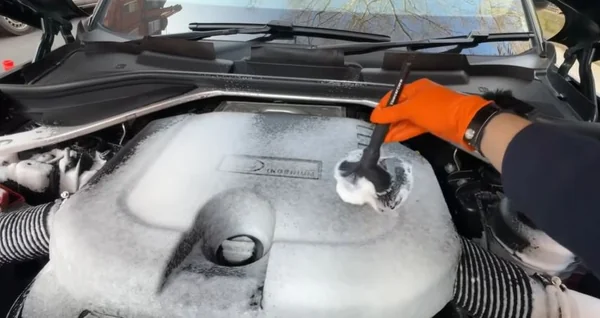
An engine bay is a hot, oily, dusty box with a lot of electrical parts packed around it. Cleaning it means loosening grease and grime, lifting it off, and getting rid of the water and chemicals without leaving any of it where it can do harm.
That is why the order matters. Cool engine first. Then cover what must stay dry. Then degrease, agitate, rinse gently, dry and dress. Skip the cover step or the cool-down step and you are gambling.
Is an engine bay detail just cosmetic?
Mostly, but not only. A clean bay makes leaks visible early, stops leaves and grit from building up around the cowl and intake, and removes the layer of oil and dust that holds moisture against rubber and connectors. It also makes a pre-sale or pre-inspection look noticeably better.
Do you need one?
Signs Your Engine Bay Is Due for a Clean
Leaves and debris in the cowl
Oak leaves, twigs and pollen collect at the base of the windshield and can end up in corners of the bay. They hold moisture and rot.
Oily film on everything
A fine gray-black coating on plastics and hoses is dust stuck to oil mist. It also makes any fresh leak invisible.
Dried-on fluid spots
Old splashes from topping off fluids or small seeps. Cleaning shows whether they are historic or ongoing.
Faded plastic covers
Engine covers go chalky from heat and old cleaners. Cleaned and dressed correctly, they come back dark and even.
Selling or trading in
Buyers, inspectors and trade-in appraisers look under the hood. A clean bay signals a car that has been looked after.
Before a repair visit
Mechanics find problems faster, and charge less time, on a clean engine than on a caked one.
Oakland conditions
What Oakland Does to the Space Under Your Hood
The East Bay’s mix of oak trees, freeways, fog and the Port puts a few specific pressures on engine bays.

Three things we see under Oakland hoods
Oak and tree debris
Coast live oaks drop leaves and sap year-round. Cars parked under canopy collect it at the base of the windshield, and some of it slips into the bay.
Port and freeway soot
Diesel exhaust, brake dust and fine road grit settle into the bay and bond to oily surfaces. It is the same fallout that embeds in paint.
Damp, salty air
The marine layer keeps humidity high enough that chloride rarely dries clean. Connectors and bare metal live with that moisture.
Neighborhoods and ZIP codes where we notice it most
Montclair
ZIP 94611
Typical issue
Oak leaves and pollen in the cowl and bay.
Rockridge
ZIP 94618
Typical issue
Tree canopy debris on street-parked cars.
West Oakland
ZIP 94607
Typical issue
Port and rail soot on oily surfaces.
Lake Merritt & Grand Lake
ZIP 94610
Typical issue
Tree litter and long curb dwell.
Fruitvale
ZIP 94601
Typical issue
Freeway grit and brake dust in the bay.
East Oakland & Elmhurst
ZIP 94621
Typical issue
I-880 corridor soot and heavy use.
Our method
How We Detail an Engine Bay, Step by Step
Let it cool
We confirm the engine has been off long enough. A warm engine dries degreaser too fast and can burn skin. If you just drove over, we start on the exterior and come back to the bay.
Inspect first
We look for loose wiring, damaged hoses, open connectors and obvious leaks. If something looks unsafe, we tell you and skip it.
Cover what must stay dry
Alternator, air intake, fuse box and battery terminals get covered with plastic or dry microfiber before any water or product goes in.
Degrease and agitate
A degreaser suited to the surface goes on, then soft brushes work it into corners, hose clamps and plastic covers.
Rinse gently, top down
Low-pressure water rinses away the residue, starting high and working down so grime does not run over cleaned parts.
Dry, remove covers and dress
Microfiber and compressed air clear the gaps and connectors, covers come off, and a water-based dressing goes only on hoses and plastic covers. The hood stays open to let moisture escape.
Know the limits
What We Won’t Do Under Your Hood
- Pressure wash it: high pressure pushes water into connectors and sensors.
- Soak exposed electrics: if wiring is damaged or taped, we leave it.
- Dress belts or bare metal: dressing belongs on rubber hoses and plastic covers only.
- Start on a hot engine: it flashes the chemicals and risks burns.
- Promise to fix problems: we clean, we don’t repair. If we spot a leak, we tell you.
If your engine bay has been modified, has aged wiring or a history of electrical trouble, send photos first. We would rather tell you it is not worth the risk than do it and find out.
DIY or pro
Can You Clean Your Own Engine Bay?
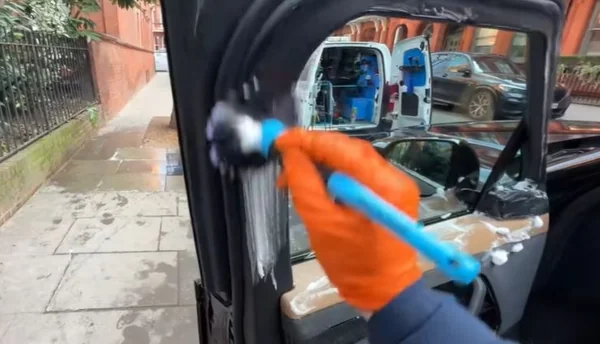
You can, and plenty of people do. The problems come from rushing and from using too much water.
If you try it
- Park in the shade and let the engine cool for at least half an hour
- Cover the alternator, air intake, fuse box and battery terminals
- Use a garden hose on a low setting, not a pressure washer
- Rinse top down, then dry with towels and let the hood stay open
- Dress only hoses and plastic covers, wipe off excess
What is the extra value of a pro?
Mostly judgment: knowing what to leave alone, what to cover twice, and how to dry tight areas. If you only want to look good for a single listing, DIY is fine. If it is a newer car with a lot of sensors, or a car you love, the careful hands are worth it.

Compare
Engine Bay Wipe-Down vs Full Engine Bay Detail
| Quick wipe-down | Full engine bay detail | |
|---|---|---|
| What it removes | Loose dust and light film | Grease, built-up grime and debris |
| Time on site | Short | Longer, includes cool-down and drying |
| Covers and electrics | Often not needed | Alternator, intake, fuse box and terminals covered |
| Best for | Cars already kept clean | Cars with real build-up, pre-sale or pre-inspection |
| Where it fits | Included with some details | $69 add-on on our price list |
Pricing
What Engine Bay Detailing Costs in Oakland
Engine bay detailing is a $69 add-on to a detail on our price list. It is a single flat figure on our list, and truly heavy build-up is quoted separately before we start.
It fits easily alongside an Exterior detailing or a Full detail. The full list of rates and add-ons is on our detailing prices page, and you can see everything we do on our mobile auto detailing in Oakland page.
Good to know
Not sure the bay needs it? Send us a photo of the hood open. We will tell you honestly whether a wipe-down will do.
Straight answers
Engine Bay Detailing Oakland: FAQ
How much does engine bay detailing cost in Oakland?
Engine bay detailing is a $69 add-on on our price list, booked alongside a detail. We confirm the final figure when you send us the car, and any unusual condition is quoted before we start, not after.
Is it safe to wash an engine bay?
Yes, when it is done with care. Modern engines are built to see rain and road spray, but electrical connectors, the alternator, the air intake and the fuse box should be covered, and water pressure should stay low. A pressure washer is how most damage happens.
Do you use a pressure washer under the hood?
No. Low-pressure water, brushes and compressed air do the work. High pressure can push water into connectors and sensors.
Should the engine be hot or cold?
Cool. A warm engine can flash-dry a degreaser into streaks, and hot metal is a burn risk. Chemical Guys’ guidance is to wait at least 30 minutes after driving, and we plan the visit around that.
Will a cleaner engine bay help me spot leaks?
Yes. Fresh oil or coolant is easy to see on clean surfaces and almost invisible on years of grime. It is one of the most practical reasons to do this.
Does dressing make the engine bay greasy?
It should not. We use a water-based dressing only on rubber hoses and plastic covers, and wipe off the excess. Belts, bare metal and anything that sees friction or extreme heat stay undressed.
How often should an engine bay be cleaned?
For most daily drivers, once a year is plenty. If the car lives under oak trees or near the Port and freeways, a light wipe-down at each detail keeps debris from building up.
Can you clean the engine bay on a classic or modified car?
Often yes, but we look first. Exposed wiring, old rubber and aftermarket parts change what is safe. Send us photos and we will tell you what we would do and what we would leave alone.
Will cleaning the engine bay void my warranty?
Check your warranty terms to be sure. Careful cleaning with covered electrical parts is a normal maintenance practice, but we cannot speak for every manufacturer or dealer policy.
Can you do this at my home or workplace?
Yes. We bring our own water and power and work at your driveway or a legal curb spot anywhere in Oakland and the East Bay.
Keep reading
Related Services
Exterior detailing
Engine bay work pairs with a proper exterior wash. Exterior detailing
Undercarriage wash
Underneath gets the same road film. Undercarriage wash
Full detail
Want everything done in one visit? Full detail
Trim restoration
Hood seals and plastic covers fade too. Trim restoration
Why trust this page
Where The Advice Comes From
The method follows published guidance from Chemical Guys on cool-down, covering electrical parts, low-pressure rinsing and dressing. Prices are from our current price list. The local notes come from working on East Bay cars and from Oakland’s freeway, Port and oak-canopy layout.
Get the Hood Open, Get It Clean
Tell us the year, make and model and whether it’s been modified. We’ll tell you what we’d do under the hood.
Contact
Oakland Mobile Detailing
1731 Poplar St, Oakland, CA 94607
📞 (341) 208-6098
Hours
Seven days a week
[7:00 AM – 7:00 PM]
Where we work
Oakland and the East Bay: Alameda, Berkeley, Emeryville, Piedmont, San Leandro, Albany, El Cerrito, Richmond, Castro Valley, Hayward.